Locations:

Ratan Sajan Diamonds DMCC

Ratan Sajan Diamonds - Gold Souk Office

Diamond Education & Buying Guide
EST. 1995 • DUBAI • NATURAL DIAMONDS

Natural Diamond Education
& Buying Guides

Explore everything you need to know about natural diamonds from understanding the 4Cs and diamond certification to choosing the perfect engagement ring with complete confidence.
The Foundation

The 4Cs of Diamond Quality

Every diamond in the world is graded on four universal characteristics Cut, Color, Clarity and Carat. Together, they determine a diamond's beauty and its price.

01 · Most Important

Cut

Cut is not the shape of a diamond it is how well the diamond is proportioned and polished. Cut controls brilliance, fire and sparkle. A perfectly cut diamond returns light back to the eye; a poor cut leaks light and looks dull, even at high color and clarity grades.

Excellent Very Good Good Fair Poor
Maximum brillianceLight leakage
02 · Whiteness

Color

Diamond color is graded from D (completely colorless) to Z (noticeable yellow or brown tint). The less color, the rarer the stone. D–F are colorless; G–J are near-colorless and offer excellent value, as any tint is difficult to see once the diamond is set.

D–F G–J K–M N–R S–Z
ColorlessLight yellow
03 · Purity

Clarity

Clarity measures natural internal marks (inclusions) and surface marks (blemishes) under 10× magnification. Grades run from Flawless (FL) to Included (I3). Diamonds graded VS2 and above are typically "eye-clean" no inclusions visible to the naked eye.

FL–IF VVS1–2 VS1–2 SI1–2 I1–3
FlawlessVisible inclusions
04 · Weight

Carat

Carat measures weight, not size one carat equals 0.20 grams. Because larger diamonds are exponentially rarer, price rises sharply at popular weights like 1.00ct and 2.00ct. Buying just under a "magic weight" (for example 0.90ct instead of 1.00ct) can save significantly with almost no visible difference.

0.50 0.75 1.00 1.50 2.00+
Everyday eleganceStatement rarity
Personal Style

Diamond Shapes Explained

Shape is the outline of the diamond viewed from above. Each shape carries its own character from the timeless round brilliant to the architectural emerald cut.

Round BrilliantMaximum sparkle, 58 facets — the most popular shape worldwide.
OvalElongated brilliance that flatters the finger and looks larger per carat.
EmeraldStep-cut elegance with long, mirror-like flashes of light.
CushionSoft, romantic corners with a warm vintage glow.
PrincessA crisp square with contemporary brilliance — great value per carat.
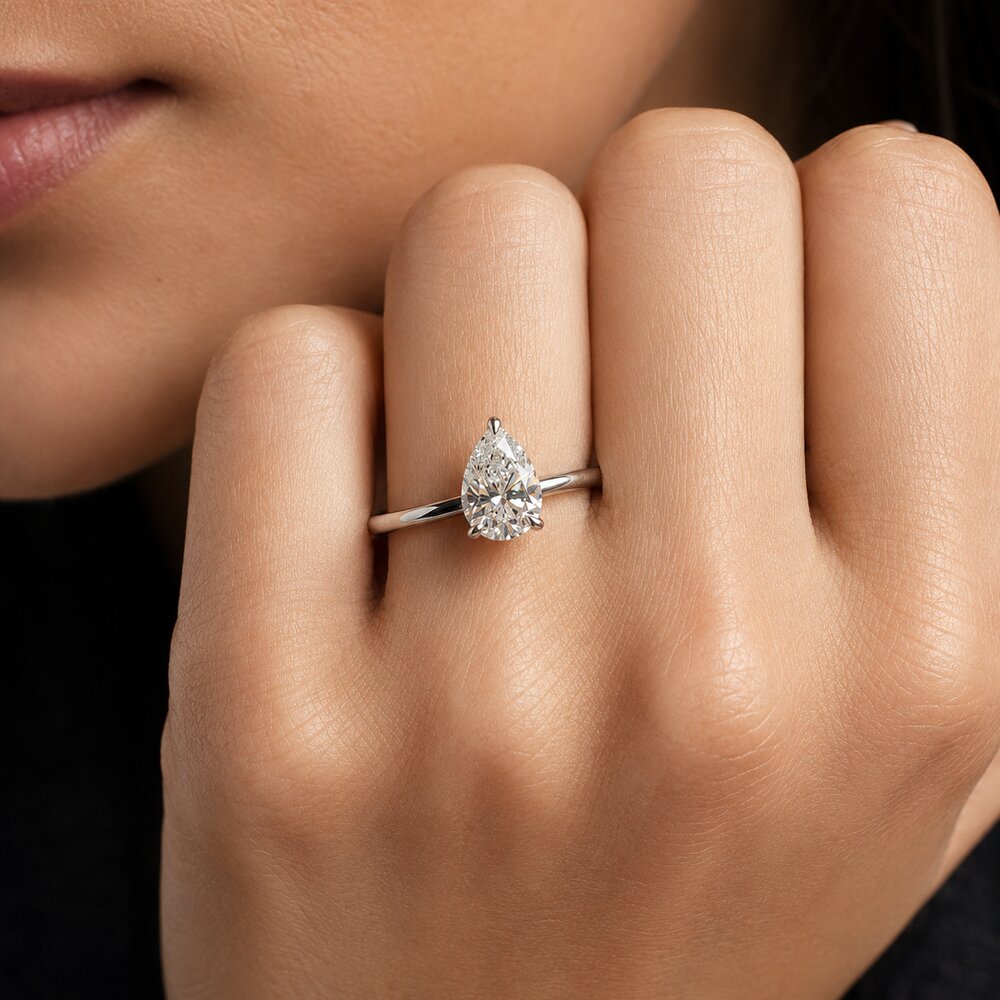
PearA graceful teardrop that elongates the hand beautifully.
MarquiseThe largest face-up appearance of any shape at equal carat weight.
RadiantBrilliant-cut fire in a trimmed rectangular outline.
HeartThe ultimate romantic symbol, demanding precise symmetry.
AsscherAn Art-Deco square step cut with hypnotic "hall of mirrors" depth.
Know the Terms

Anatomy of a Diamond

TABLE CROWN GIRDLE PAVILION CULET
Table
The flat top facet the diamond's largest "window" for light entry.
Crown
The upper section between table and girdle its angles shape the fire.
Girdle
The outer edge where the setting holds the stone.
Pavilion
The lower cone that reflects light back through the crown the engine of brilliance.
Culet
The tiny point at the base; ideally too small to see.
Buy With Confidence

Diamond Certification

A certificate is a diamond's passport an independent laboratory report verifying its exact 4C grades. Never buy a significant diamond without one.

GIA

The Gemological Institute of America created the 4C grading system and is regarded as the world's most consistent authority for natural diamonds.

HRD Antwerp

Europe's leading diamond laboratory, based in the historic Antwerp diamond district, trusted across international trade for rigorous grading.

IGI

The International Gemological Institute, the world's largest independent lab — the leading standard for lab-grown diamond certification.

Every certified diamond at Ratan Sajan is accompanied by its original laboratory report. Explore live certified stones on our Online Diamond Prices page.

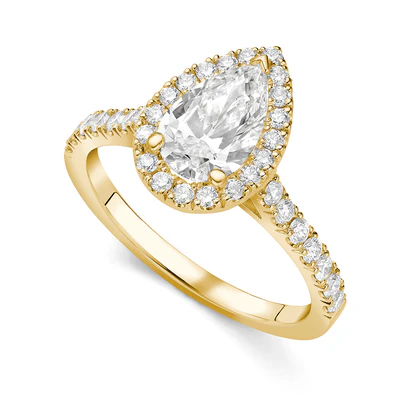
GIA certified natural diamond solitaire ring in yellow gold by Ratan Sajan Diamonds Dubai
Two Origins, One Chemistry

Natural vs Lab-Grown Diamonds

Natural diamonds formed over billions of years deep within the earth each one a finite, unrepeatable creation. Lab-grown diamonds share identical chemical, physical and optical properties, but are created in weeks and priced significantly lower.

Natural diamonds hold enduring rarity and heritage value lab-grown diamonds offer size and quality at accessible prices. Neither is "better" the right choice depends on what the diamond means to you.

At Ratan Sajan we offer both: natural diamonds through RS Diamonds and lab-grown through Laqura.

Beyond the 4Cs

Fluorescence & Diamond Pricing

Fluorescence is a soft blue glow some diamonds emit under UV light. In most stones it is invisible in daily wear and in slightly tinted diamonds (I–J color), medium blue fluorescence can actually make the stone appear whiter, often at a lower price.

Pricing follows rarity. Two diamonds of the same carat weight can differ in price by 50% or more based on cut, color, clarity, fluorescence and certification. This is why comparing certified stones side by side matters more than comparing carat alone.

Compare live certified diamond prices in real time on our Online Diamond Prices page the same wholesale inventory used by the trade.

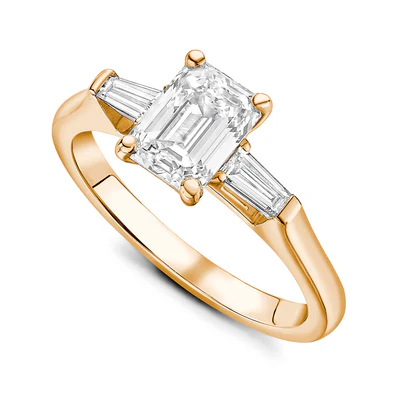
Emerald cut natural diamond ring showing step-cut facets, Ratan Sajan Dubai
Common Questions

Diamond Buying FAQs

Which of the 4Cs is most important?

Cut. A well-cut diamond maximises sparkle and can make a stone look whiter and larger than its grades suggest. Prioritise Excellent or Very Good cut first, then balance color and clarity to your budget.

What is an "eye-clean" diamond?

A diamond whose inclusions cannot be seen with the naked eye, only under magnification. Most VS2 and many SI1 diamonds are eye-clean, offering excellent value compared to higher clarity grades.

Is a GIA or IGI certificate better?

GIA is the benchmark for natural diamonds, while IGI is the leading standard for lab-grown diamonds. HRD Antwerp is equally respected across Europe. What matters most is that your diamond carries a report from one of these independent laboratories.

How much should I spend on an engagement ring?

There is no rule — the right budget is what is comfortable for you. Smart choices like near-colorless grades (G–J), eye-clean clarity (VS2–SI1) and just-under carat weights stretch any budget significantly further.

Do lab-grown diamonds test as real diamonds?

Yes. Lab-grown diamonds are chemically and optically identical to natural diamonds and pass a diamond tester. Only advanced laboratory equipment can distinguish origin, which is why certification stating the origin matters.

Why buy diamonds in Dubai?

Dubai is one of the world's largest diamond trading hubs. Buying from a DMCC-registered diamantaire like Ratan Sajan means direct wholesale access, certified stones and tax-efficient pricing compared to retail markets.

Ready When You Are

Speak With a Diamantaire

Four decades of expertise, certified natural and lab-grown diamonds, and honest guidance from our offices in Almas Tower and Gold Souk, Dubai.

View Diamond Prices Contact Us